Global 5-Aminolevulinic Acid Market 2025 - Players, Regions, Product Types, Application & Forecast Analysis
| Chemical & Material | Formats |
| Updated: March 2025 | 4.7 (78) |
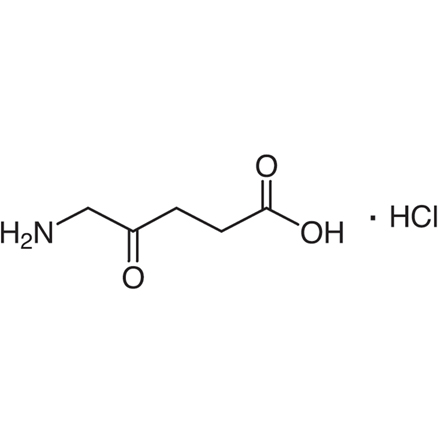
5-Aminolevulinic acid (ALA) is a compound essential in heme synthesis and finds medical applications, including photodynamic therapy for skin conditions and cancer, as well as in diagnostic procedures like fluorescence-guided surgery for enhanced tissue visualization.
Introduction of the 5-Aminolevulinic Acid Market
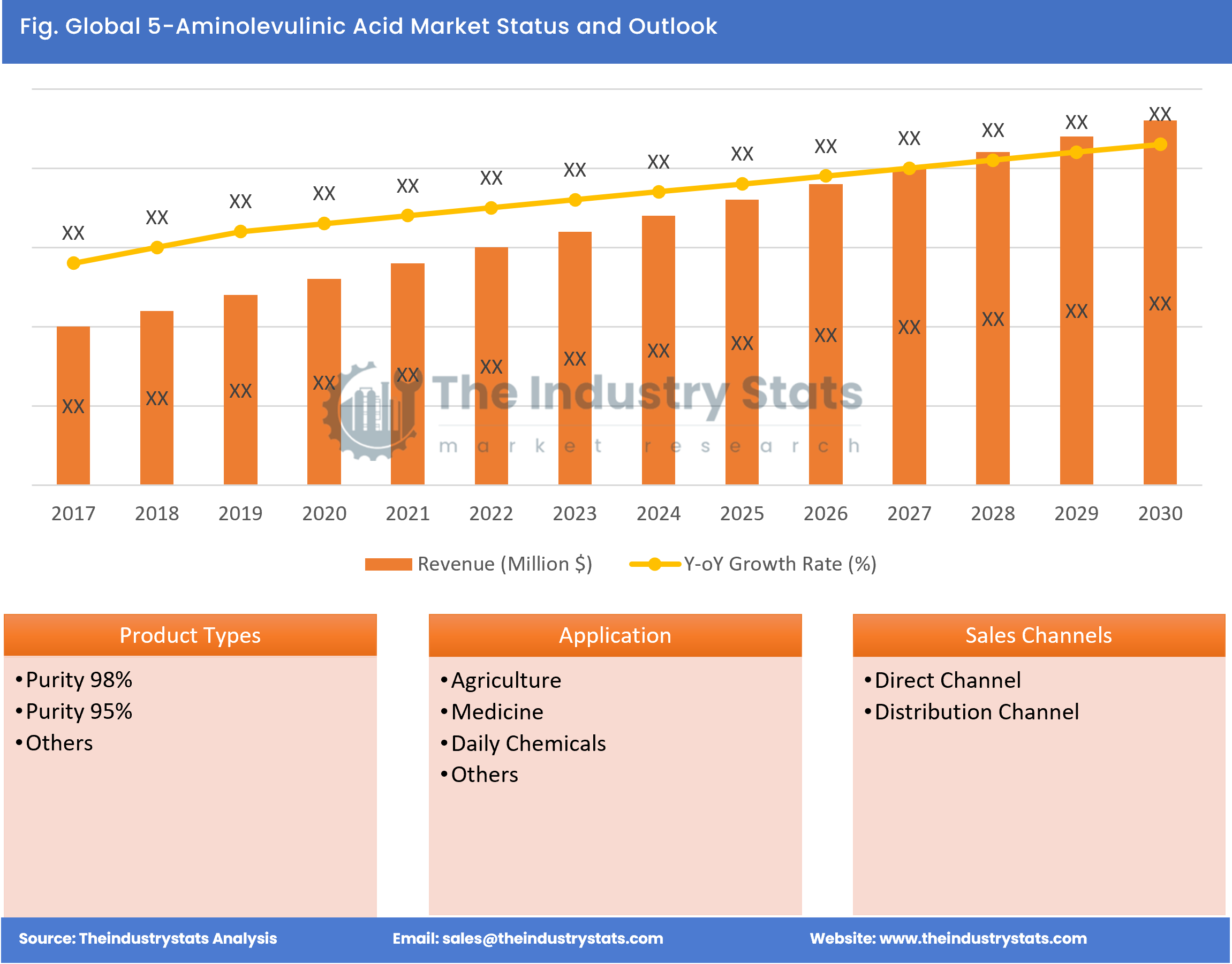
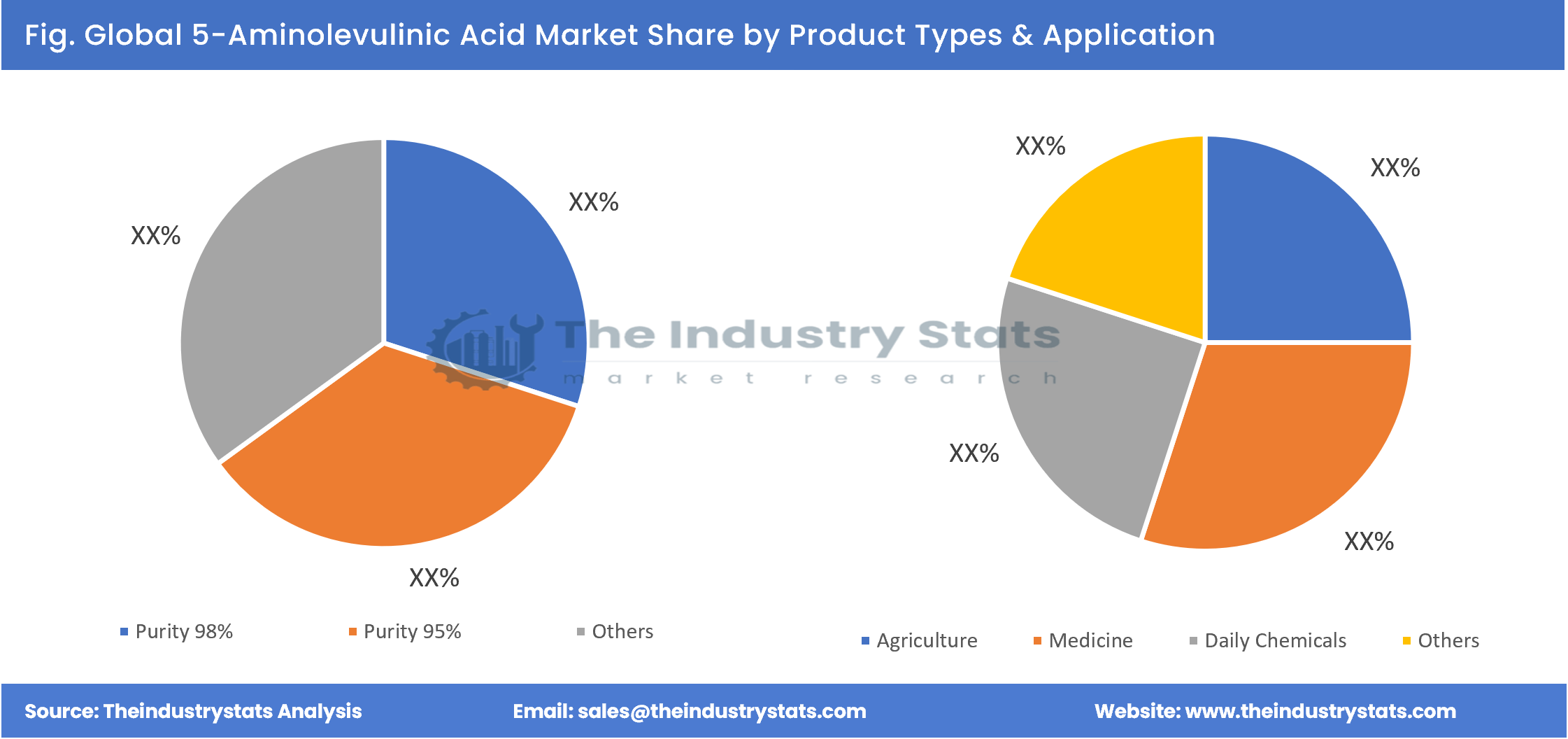
The 5-Aminolevulinic Acid Market is anticipated to experience significant growth between 2025 and 2030, driven by advancements in technologies and the increasing demand. The market includes various types of 5-Aminolevulinic Acid, such as Purity 98%, Purity 95%, & Others. Sales are conducted through multiple channels, including direct sales and distribution networks. The report provides comprehensive insights into regional and global market opportunities, offering detailed analyses of key market segments, trends, and the competitive landscape over the forecast period.
Report Highlights
Market Segmentation: The market is divided into segments based on product types (Purity 98%, Purity 95%, etc) and applications (Agriculture, Medicine, etc), with insights into sales, revenue, and market share for each segment.
Market Dynamics: Explore the factors propelling market growth, including technological advancements, economic drivers, and challenges. The report employs analytical tools like Porter’s Five Forces to provide a nuanced understanding of market forces.
Competitive Analysis: Understand the strategic moves and innovations of major market players, their market positioning, and competitive strategies. This section offers a detailed look at the strategies and developments shaping the competitive landscape.
The 5-Aminolevulinic Acid Market report presents an in-depth analysis of industry trends and growth prospects, identifying strategic opportunities for businesses to leverage evolving market dynamics.
Leading Market Players
The report includes a detailed analysis of both established and emerging companies in the market. It highlights key players based on their innovative capabilities and market influence, such as Sobeo Biotech, Xinlian Biochemical, NMT Biotech, Natural Field, Fudan-zhangjiang, SBI Holdings, Medac, Midas Pharma, Neopharma, emphasizing their roles in shaping market trends and dynamics.
(Note: The list of players mentioned here is not final. We encourage you to request a sample report to review the most up-to-date list of all relevant players.)
Market Segments
Products Types Analysis
- Purity 98%
- Purity 95%
- Others
Applications Analysis
- Agriculture
- Medicine
- Daily Chemicals
- Others
(Note: The segmentation provided in this report is not limited to these categories. We can further break down the data into additional segments as per your specific requirements. We encourage you to request a sample report to explore the detailed scope of our research and customized insights.)
Sales Channel Analysis
- Direct Channel
- Distribution Channel
Market segment by Region/Country including:
- North America (United States, Canada, Mexico)
- Europe (Germany, United Kingdom, France, Italy, Russia, Spain, Benelux, Poland, Austria, Portugal, Rest of Europe)
- Asia-Pacific (China, Japan, Korea, India, Southeast Asia, Australia, Taiwan, Rest of Asia Pacific)
- South America (Brazil, Argentina, Colombia, Chile, Peru, Venezuela, Rest of South America)
- Middle East & Africa (UAE, Saudi Arabia, South Africa, Egypt, Nigeria, Rest of Middle East & Africa)
Research Methodology
The report offers a detailed examination of the 5-Aminolevulinic Acid Market, analyzing historical, current, and future trends. A rigorous research methodology, including both primary and secondary research along with expert insights, is used to develop precise market forecasts. It takes into account various economic, regulatory, and technological factors influencing the market.
Supply Chain Analysis
The supply chain analysis reviews the flow of goods from suppliers to end-users, highlighting the role of manufacturers, distributors, and retailers. This section identifies opportunities for operational improvements and strategic partnerships to enhance market competitiveness.
Pricing Trends
This section analyzes historical and projected pricing trends, offering valuable insights for businesses to craft competitive pricing strategies. By examining both quantitative data and market sentiment, businesses can optimize pricing models for better market positioning and profitability.
Competitive Landscape & Company Insights
The report delves into a comprehensive evaluation of leading companies in the 5-Aminolevulinic Acid Market, focusing on their products, financial performance, strategic initiatives, and global reach. This section helps stakeholders understand the competitive dynamics and identify areas for collaboration and competition.
The analysis begins with an overview of top companies, assessing their product portfolios and financial health. Key strategic initiatives such as product innovations, market expansions, and partnerships are highlighted. The report includes a SWOT analysis to evaluate strengths, weaknesses, opportunities, and threats, pinpointing areas for growth and improvement. It covers recent developments, partnerships, mergers, acquisitions, and product launches, illustrating the market's dynamic nature. Companies’ regional strategies and market penetration are also examined, offering insights into their geographic and industry influence. The company list can be customized to meet specific client needs, providing tailored insights into the competitive landscape.
Regional and Industry Footprint
This section explores the geographic presence and industry influence of each key player, detailing their operational regions and market sectors served. It provides a comprehensive view of their strategic positioning and market impact.
Import-Export Analysis
The report offers an in-depth import-export analysis across major regions, including North America, Europe, Asia-Pacific, South America, and the Middle East & Africa, from 2017 to 2024. This section highlights the flow of 5-Aminolevulinic Acid into and out of these regions, examining trade dynamics and identifying key export and import partners. Understanding these trends helps businesses navigate global supply chains and optimize their international trade strategies.
Demand-Supply Gap Analysis
The demand-supply gap analysis provides insights into regional disparities between market demand and supply from 2017 to 2024. It covers North America, Europe, Asia-Pacific, South America, and the Middle East & Africa, highlighting areas with excess demand or surplus supply. By identifying these gaps, companies can target specific regions for growth, address unmet needs, and balance their production and distribution strategies to enhance market presence.
Scope of Report
| Base Year of the Analysis | 2024 |
|---|---|
| Historical Period | 2017-2024 |
| Forecast Period | 2025-2030 |
| Types Covered | Purity 98%, Purity 95%, Others |
| Applications Covered | Agriculture, Medicine, Daily Chemicals, Others |
| Sales Channels Covered | Direct Channel, Distribution Channel |
| Regions Covered | North America, Europe, Asia-Pacific, South America, Middle East and Africa |
| Countries Covered | United States, Canada, Mexico, Germany, United Kingdom, France, Italy, Russia, Spain, Benelux, Poland, Austria, Portugal, Rest of Europe, China, Japan, Korea, India, Southeast Asia, Australia, Taiwan, Rest of Asia Pacific, Brazil, Argentina, Colombia, Chile, Peru, Venezuela, Rest of South America, UAE, Saudi Arabia, South Africa, Egypt, Nigeria, Rest of Middle East & Africa |
| Companies Covered |
Sobeo Biotech, Xinlian Biochemical, NMT Biotech, Natural Field, Fudan-zhangjiang, SBI Holdings, Medac, Midas Pharma, Neopharma (Please note that the list of players mentioned here is not final. We encourage you to request a sample report to review the most up-to-date list of all relevant players.) |
- Methodology/Research Approach
The research study involved the extensive usage of both primary and secondary data sources. The research process involved the study of various factors affecting the industry, including the government policy, market environment, competitive landscape, historical data, present trends in the market, technological innovation, upcoming technologies and the technical progress in related industry, and market risks, opportunities, market barriers and challenges. The following illustrative figure shows the market research methodology applied in this report.
Research Programs/Design
Table Research Programs/Design

Market Size Estimation
Top-down and bottom-up approaches are used to validate the global product market size and estimate the market size for company, regions segments, product segments and application (end users).
The market estimations in this report are based on the marketed sale price of product (excluding any discounts provided by the manufacturer, distributor, wholesaler or traders). The percentage splits, market share, and breakdown of the product segments are derived on the basis of weightages assigned to each of the segments on the basis of their utilization rate and average sale price. The regional splits of the overall product market and its sub-segments are based on the percentage adoption or utilization of the given product in the respective region or country.
Major companies from the market are identified through secondary research and their market revenues determined through primary and secondary research. Secondary research included the research of the annual and financial reports of the top companies; whereas, primary research included extensive interviews of key opinion leaders and industry experts such as experienced frontline staff, directors, CEOs and marketing executives. The percentage splits, market share, growth Rate and breakdown of the product markets are determined through using secondary sources and verified through the primary sources.
All possible factors that influence the markets included in this research study have been accounted for, viewed in extensive detail, verified through primary research, and analyzed to get the final quantitative and qualitative data. The market size for top-level markets and sub-segments is normalized, and the effect of inflation, economic downturns, and regulatory & policy changes or other factors are not accounted for in the market forecast. This data is combined and added with detailed inputs and analysis from research and presented in the report
The following figure shows an illustrative representation of the overall market size estimation process used for this study.
Figure Bottom-up and Top-down approaches

Market Breakdown and Data Triangulation
After complete market engineering with calculations for market statistics; market size estimations; market forecasting; market breakdown; and data triangulation, extensive primary research was conducted to gather information and verify and validate the critical numbers arrived at. In the complete market engineering process, both top-down and bottom-up approaches were extensively used, along with several data triangulation methods, to perform market estimation and market forecasting for the overall market segments and sub segments listed in this report. Extensive qualitative and further quantitative analysis is also done from all the numbers arrived at in the complete market engineering process to list key information throughout the report.
Figure Data Triangulation

- Data Source
Secondary Sources
Secondary sources include such as press releases, annual reports, non-profit organizations, industry associations, governmental agencies and customs data etc. This research study involves the usage of widespread secondary sources, directories, databases such as Bloomberg Business, Wind Info, Hoovers, Factiva (Dow Jones & Company), and TRADING ECONOMICS, and News Network, Statista, Federal Reserve Economic Data, annual reports, BIS Statistics, ICIS; company house documents; CAS (American Chemical Society); investor presentations; and SEC filings of companies. Secondary research was used to identify and collect information useful for the extensive, technical, marketoriented, and commercial study of the Product market. It was also used to obtain important information about the top companies, market classification and segmentation according to industry trends to the bottom-most level, and key developments related to market and technology perspectives.
Table Key Data Information from Secondary Sources

Primary Sources
In the primary research process, various sources from both the supply and demand sides were interviewed to obtain qualitative and quantitative information for this report. The primary sources from the supply side include product Company (and their competitors), opinion leaders, industry experts, research institutions, distributors, dealer and traders, as well as the raw materials suppliers and producers etc.
The primary sources from the demand side include industry experts such as business leaders, marketing and sales directors, technology and innovation directors, supply chain executive, market (product buyers), and related key executives from various key companies and organizations operating in the global market.
Primary research was conducted to identify segmentation types, product price range, product Application, key Company, raw materials supply and the downstream demand, industry status and outlook, and key market dynamics such as risks, influence factors, opportunities, market barriers, industry trends, and key player strategies.
Table Key Data Information from Primary Sources


We are ISO 9001:2015 recognized that ensures quality services and product delivery to our clients.

We are GDPR and CCPA compliant! Your transaction & personal information is protected from unauthorized use.